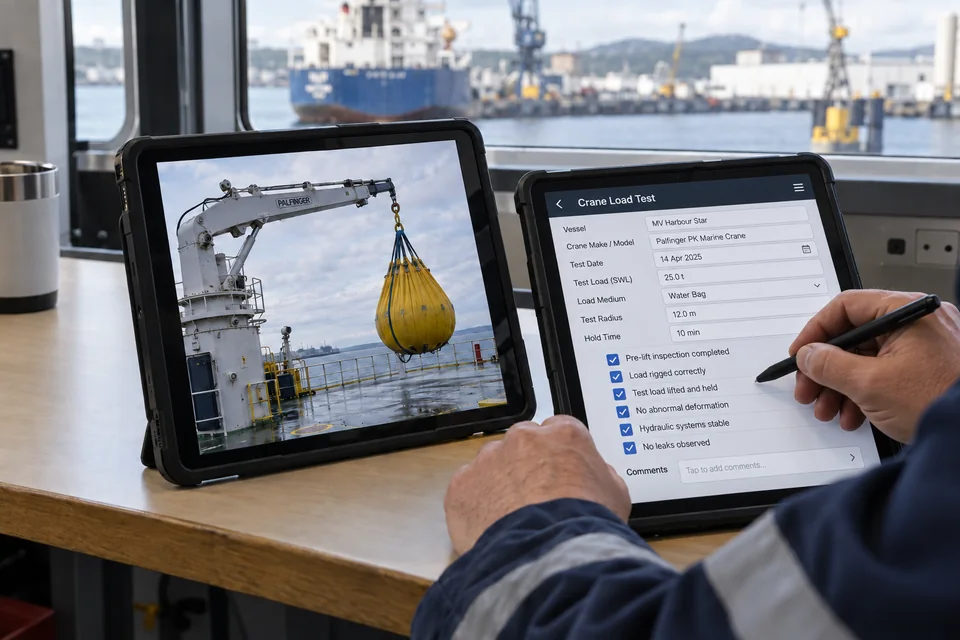
Arrange proof load testing for cranes and lifting equipment with WWLTS teams in Gauteng, Durban and Mozambique. Send your equipment type, rated capacity, site and preferred dates for a quotation covering the agreed test arrangement, mobilisation and reporting. See our Durban ship-crane project and 40-tonne overhead crane test for examples of our work.
A planned test, from mobilisation to the final record
We bring the test load, measurement and practical site arrangements together. The work starts with identifying the lifting machine or structure and understanding the configuration to be tested. This allows the team to select a workable arrangement before equipment is mobilised.
A ship crane, workshop hoist and lifting beam each present different test conditions. WWLTS plans the loading arrangement, measurement and supporting equipment around the asset and agreed scope. Water-filled bags and solid weights provide different options for site access and logistics.
WHAT WE DO
A closer look at the work
The work is scoped around your equipment, site and required outcomes.
01
Equipment and configuration
We review the asset identity, rated capacity, intended test positions and available records. A test on a crane, lifting beam or other lifting appliance must be planned for that particular configuration, rather than treated as a standard package.
02
Test equipment and site preparation
Water-filled bags or solid weights are considered against access, headroom, transport and handling requirements. The arrangement also needs compatible lifting accessories, load measurement and a clear plan for filling and draining where water bags are used.
03
Controlled testing and records
The agreed scope brings examination, test preparation, loading and recorded observations into one programme. Any limitations or issues identified during the work should be captured so the owner can understand the result and plan the next action.
WHAT YOU RECEIVE
Clear findings. A practical next step.
A record tied to the identified asset and agreed test configuration, with the test findings and any limitations or follow-up actions identified during the work.
Tell us how your team uses its equipment records and which documents the project requires. We agree the reporting scope before the work starts.
Share the equipment identity, capacity, configuration and site details. We review the loading arrangement, water or solid-weight options, access and measurement requirements before mobilisation.
02
Carry out the agreed test
The agreed work brings the equipment examination, test arrangement and controlled loading together. Site preparation and responsibilities are confirmed for the particular asset and operating conditions.
03
Record the configuration and findings
Review the test record for the identified asset, including the arrangement used, observations and any limitations or matters requiring further attention.
THE RIGHT TEST LOAD
Match the method to the machinery
For standard fork and platform configurations, use solid weights. For suitable suspended crane loads, either method may be appropriate.
Equipment
Test-load option
What guides the choice
Forklifts and telehandlers on forks
Solid weights
Reproduce the load position and load centre for the attachment and configuration.
Mobile elevating work platforms
Solid weights
Apply the required load within the platform using the prescribed distribution.
Suitable overhead, mobile, marine and port cranes
Water bags or solid weights
Select around the suspended-load arrangement, clearance, water and handling facilities.
Manual chain blocks and lever hoists
Suitable weights or hydraulic test rig
Confirm the test method and required operating stroke for the hoist.
Water bags travel empty and allow the load to be built gradually on site. Their advantages depend on sufficient clearance, suitable connections and a planned water supply and discharge route.
Based on the WWLTS company portfolio, sections on test weights, water bags and inspection reporting. Confirm the scope for your equipment with our team.
PLAN YOUR QUOTE
Start with your equipment. We’ll help define the scope.
Send the details you have. Our team will review the requirement and come back to you about the arrangement, availability and quotation.
Inspection and test records available for the asset
Planned location, access arrangements and target dates
Any manufacturer, client or project-specific requirements
Include a contact person and tell us about any access restrictions or deadlines.
BEFORE YOU ENQUIRE
Your questions, answered
Should we use water bags or solid weights?
That depends on the equipment and site. Water supply, drainage, headroom and transport favour different arrangements. Send photographs and equipment details so our team can discuss the practical options.
What happens after I request a quote?
The team reviews your equipment and site information, clarifies any missing details and confirms the proposed scope, availability and pricing. Sending an enquiry does not book a test or confirm an appointment.