

01 · Define the asset and scope
The work starts with the equipment being identified and the inspection or testing requirement agreed. Supply the asset register, machine information, previous findings and any relevant repair or modification records.
The resulting documentation needs to be read against that identified equipment, its configuration and the scope actually completed. Access restrictions and examination limitations matter when interpreting the findings.
02 · Examine the relevant systems
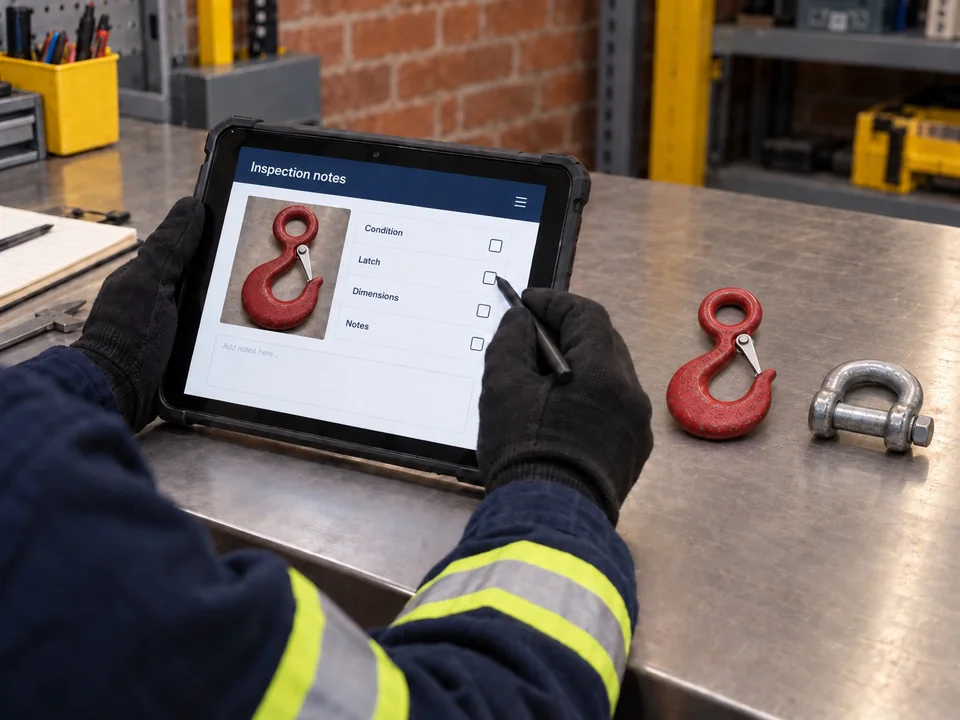
Our portfolio describes inspection of structural, mechanical and electrical components, as applicable to the equipment. Examination precedes load testing so findings can inform the next step.
The scope follows the machinery involved: for example, crane structure and mechanisms, accessible rope or chain, hooks and connections, operating controls and relevant safety devices. Each job’s agreed scope determines what is covered.
03 · Record clear findings
The report connects observations to the asset and component concerned. Where testing forms part of the work, the record should identify the relevant configuration and test information alongside the findings.
Review the condition identified, areas needing attention and any limitations with the inspecting team. Clear findings give owners and maintenance teams a practical basis for further investigation, maintenance planning and expenditure.
04 · Keep inspection independent
Our company portfolio describes WWLTS as an independent third-party inspectorate, separate from repair and maintenance provision. Clients can take the findings to their chosen maintenance contractor to arrange corrective work.
This separation lets the inspection findings guide the work without tying the client to a repair service. Inspection after corrective work can be arranged as a separate scope.
05 · Close the loop and retain the history
Keep the report, contractor’s repair records and any follow-up inspection or test documentation together against the equipment identifier. Tell us what changed when arranging a further examination.
The portfolio describes independent verification of work carried out by maintenance providers. Agree the required reinspection or testing explicitly; completion of a repair does not by itself establish that every inspection or test requirement has been met.
Discuss your equipment
Explore the relevant service or equipmentBased on the WWLTS company portfolio, sections on test weights, water bags and inspection reporting. Confirm the scope for your equipment with our team.