Bring vessel access and test logistics into one programme
Marine lifting projects require coordination between the vessel, site team and testing crew. We plan the test equipment and loading arrangement around the crane, intended configuration and the practical conditions at the berth or worksite.
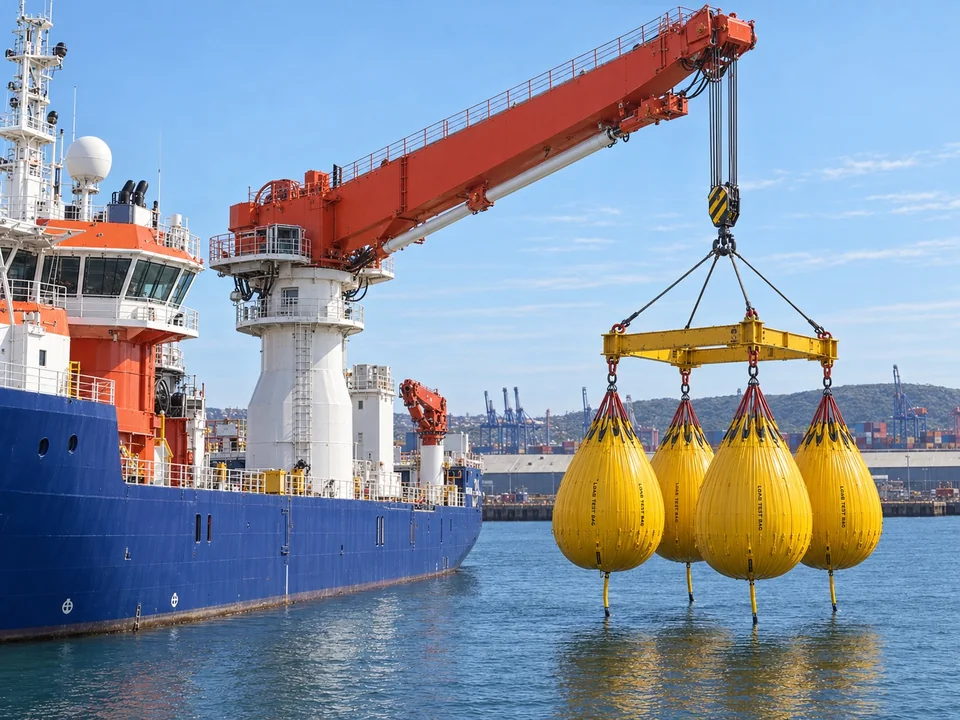
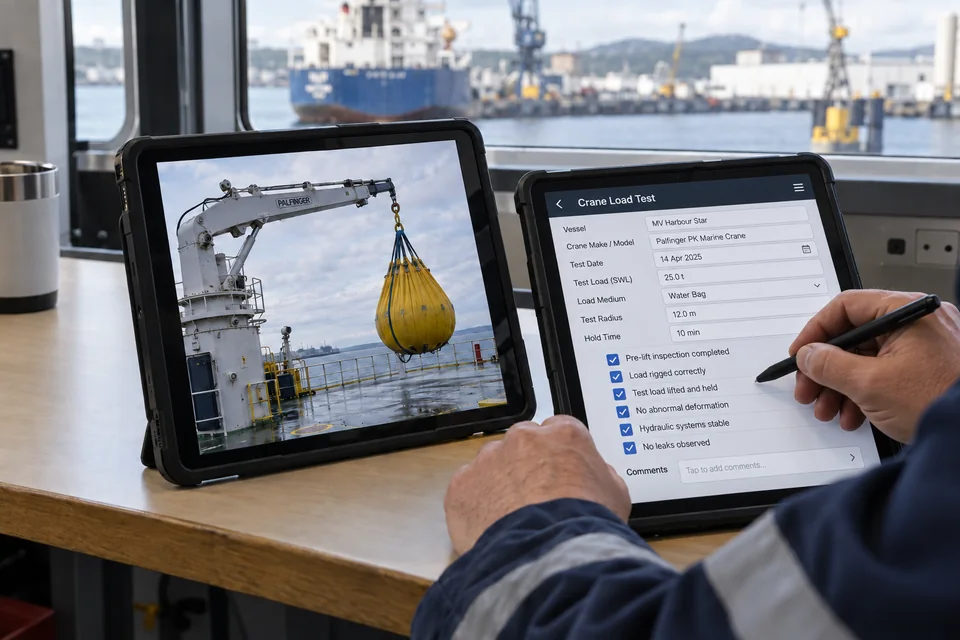
Marine crane testing brings vessel access, working radius and equipment mobilisation together. The crane configuration and loading arrangement must be understood before equipment is selected. WWLTS supports planning and test delivery with water bags, load measurement and suitable rigging.
WHAT WE DO
A closer look at the work
The work is scoped around your equipment, site and required outcomes.
01
Vessel and crane information
The equipment identity, capacity information and intended working configuration establish the test scope. Vessel records, drawings and previous reports help clarify the project requirements and any areas needing attention.
02
Mobilise the test equipment
Water bags, load measurement and rigging must suit the available clearance and crane arrangement. Port access, equipment delivery, water supply and controlled drainage are considered before mobilisation.
03
Agree access and reporting
The vessel schedule, responsible contacts and any witness or documentation requirements should be agreed early. The programme needs enough time for preparation, examination, testing and recording the outcome.
WHAT YOU RECEIVE
Clear findings. A practical next step.
Project documentation for the identified marine lifting appliance and agreed test scope, including the findings and any limitations affecting the work.
Tell us how your team uses its equipment records and which documents the project requires. We agree the reporting scope before the work starts.
Send vessel and berth information, the crane configuration and programme. Identify access permissions, water supply and project documentation requirements before equipment is mobilised.
02
Prepare and test the marine appliance
The test equipment, measurement and rigging are arranged for the agreed crane configuration. The programme coordinates vessel access, examination, loading and equipment recovery.
03
Review the vessel test records
Review the equipment identity, test scope and findings in the agreed project documentation. Any limitations or outstanding actions are retained with the vessel equipment records.
TEST-LOAD SELECTION
Choose around the equipment and site
Water bags or solid weights may suit this crane, subject to the configuration and agreed method. Water bags travel empty and allow staged filling; solid weights avoid reliance on water supply and drainage.
Rated capacity information and intended test configuration
Port access requirements, programme and available water supply
Include a contact person and tell us about any access restrictions or deadlines.
BEFORE YOU ENQUIRE
Your questions, answered
What vessel information should we send?
Start with the vessel name, berth or location, crane identification and capacity details, intended test configuration and your schedule. Include any project-specific reporting or witness requirements.
What happens after I request a quote?
The team reviews your equipment and site information, clarifies any missing details and confirms the proposed scope, availability and pricing. Sending an enquiry does not book a test or confirm an appointment.
WWLTS proof load testing of two 440-tonne ship deck cranes using water-filled test bags at Dormac Yard, Durban Port. The company video description reports completion in under 12 hours.