
01
Identify and prepare the batch
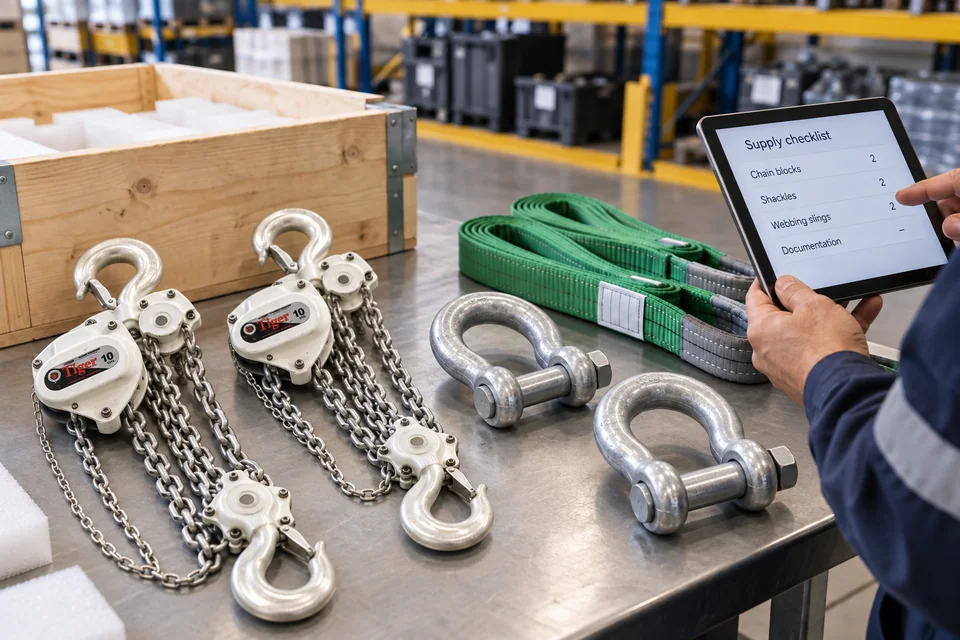
List the types, capacities, asset numbers and quantities of hoists. Tell us about equipment with missing identification, known faults, repairs or altered chain lengths before the programme is confirmed.
Services
Inspection and testing support for manual hoists used in maintenance and lifting operations.
THE SERVICE
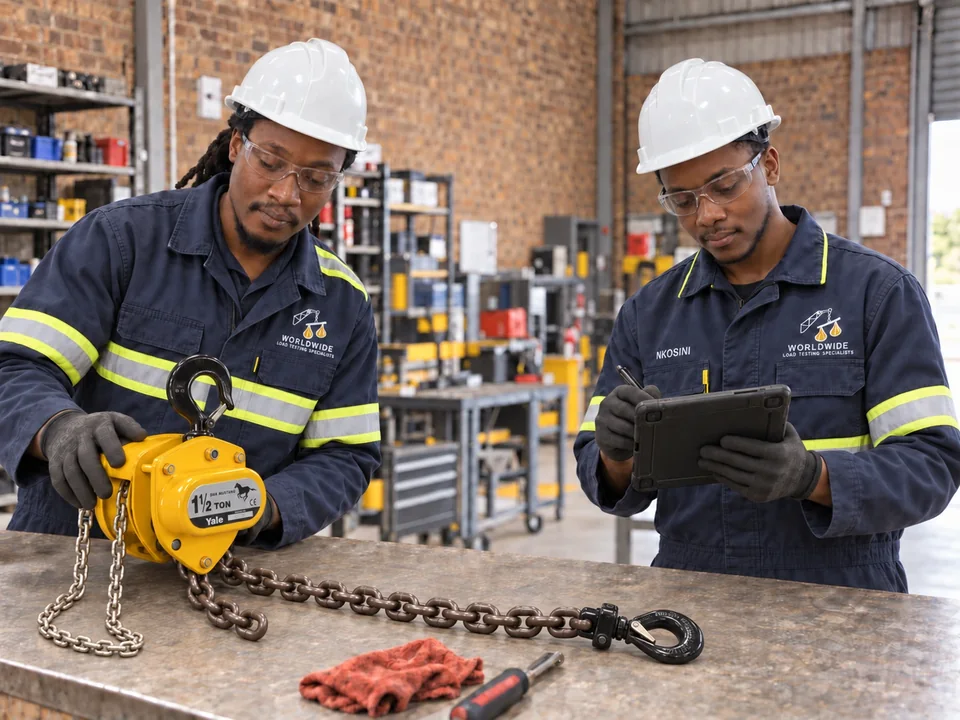
Manual hoists are easier to manage when identification, capacities and inspection records stay together. We help plan batches of chain blocks and lever hoists for examination, applicable testing and equipment-specific reporting.
An organised batch of identified hoists makes inspection, testing and reporting easier to coordinate. Share the capacities, quantities and previous records so WWLTS can discuss a suitable test arrangement and programme.
WHAT WE DO
The work is scoped around your equipment, site and required outcomes.
List the types, capacities, asset numbers and quantities of hoists. Tell us about equipment with missing identification, known faults, repairs or altered chain lengths before the programme is confirmed.

The agreed examination considers accessible parts such as the load chain, hooks, body and operating mechanism. Functional observations and the equipment’s condition inform the work that can proceed within the scope.

Testing needs a suitable arrangement for the particular hoist. Location, handling, capacity and turnaround requirements guide the choice of workshop or site-based support and the equipment needed.
WHAT YOU RECEIVE
Findings associated with the individual hoists and the testing performed, helping your team reconcile the batch with its equipment register.
Tell us how your team uses its equipment records and which documents the project requires. We agree the reporting scope before the work starts.
Our reporting methodology ↗HOW IT WORKS

Group the chain blocks and lever hoists by identification and capacity. Send quantities, previous reports and known faults so the batch can be planned appropriately.
The examination and suitable test arrangement are agreed for the hoists presented. Condition, functional observations and any limitations are recorded for the individual equipment.
Review the findings against the individual hoist identifiers. This helps your team distinguish completed work from equipment requiring repairs, further examination or another action.
TEST-LOAD SELECTION
Suitable weights or a compatible hydraulic test rig may be used for manual hoists. The method must provide the required operation and test stroke.
Compare the methods and equipment applications ↗PLAN YOUR QUOTE
Send the details you have. Our team will review the requirement and come back to you about the arrangement, availability and quotation.
Request this service ↗Speak to your local branch ↗Include a contact person and tell us about any access restrictions or deadlines.
BEFORE YOU ENQUIRE
Include them and clearly describe the known condition. The team can distinguish inspection, repair enquiries and testing requirements when agreeing the scope rather than treating every item as ready for a test.
The team reviews your equipment and site information, clarifies any missing details and confirms the proposed scope, availability and pricing. Sending an enquiry does not book a test or confirm an appointment.